

Finding the right English learning materials can make a big difference when children begin preparing for an international English exam. At this stage, young learners need opportunities to review essential vocabulary, develop basic language skills, and become familiar with different question types. Starters 2 is one resource parents may consider when looking for Cambridge English practice materials for children.
Designed to support practice at the beginner level, this type of material can help students work on listening, reading, writing, and speaking while becoming more familiar with the Cambridge Pre A1 Starters exam format. Regular practice also allows children to identify areas for improvement and build confidence as they progress.
So, what is Starters 2, what does it cover, and how can children use it effectively? This guide explores the book’s main features, potential benefits and limitations, study strategies, and additional resources to support exam preparation.
What Is Starters 2?
Starters 2 is a name commonly used when searching for practice materials associated with Cambridge Pre A1 Starters. Pre A1 Starters is the first level in the Cambridge English Qualifications for young learners, designed for children who are developing their foundational English skills.
Unlike a general English textbook that introduces new language concepts through structured lessons, an exam practice book focuses more on applying previously learned knowledge to specific tasks. Students can use practice activities to review vocabulary, understand instructions, and become familiar with questions commonly associated with beginner-level English assessments.
Before choosing a copy of Starters 2, parents should check the exact title, edition, contents, and available supplementary resources. These details help determine whether the material matches a child’s current proficiency and learning objectives.
Who Should Use Starters 2?
Starters 2 may be suitable for children who:
- Are learning basic English and want to become familiar with Cambridge Pre A1 Starters question types.
- Have learned common vocabulary related to family, school, animals, colors, and everyday objects.
- Need additional practice in listening, reading, writing, and speaking.
- Want to review foundational knowledge before taking a Cambridge English exam for young learners.
Age alone does not determine whether a practice book is appropriate. Parents should also consider a child’s vocabulary range, listening comprehension, reading ability, and confidence when using English.
Key Information About Starters 2
| Feature | Details |
| Resource name | Cambridge Starters 2 |
| Reference level | Pre A1 Starters |
| Target learners | Children developing basic English skills |
| Related skills | Listening, Reading & Writing, Speaking |
| Main purpose | Practice, review, and exam familiarization |
| Supplementary resources | Audio files, answer keys, and instructions, if available in the selected edition |
The exact structure, number of practice tests, and supplementary materials may vary by edition. Reviewing the table of contents and available resources before studying can help families prepare an appropriate learning plan.
What Does the Starters 2 Book Cover?
One important consideration when choosing Starters 2 is how well its activities support the skills children need at the Pre A1 level. Rather than memorizing isolated vocabulary items, young learners benefit from practicing how to recognize information, understand instructions, and use English in familiar contexts.
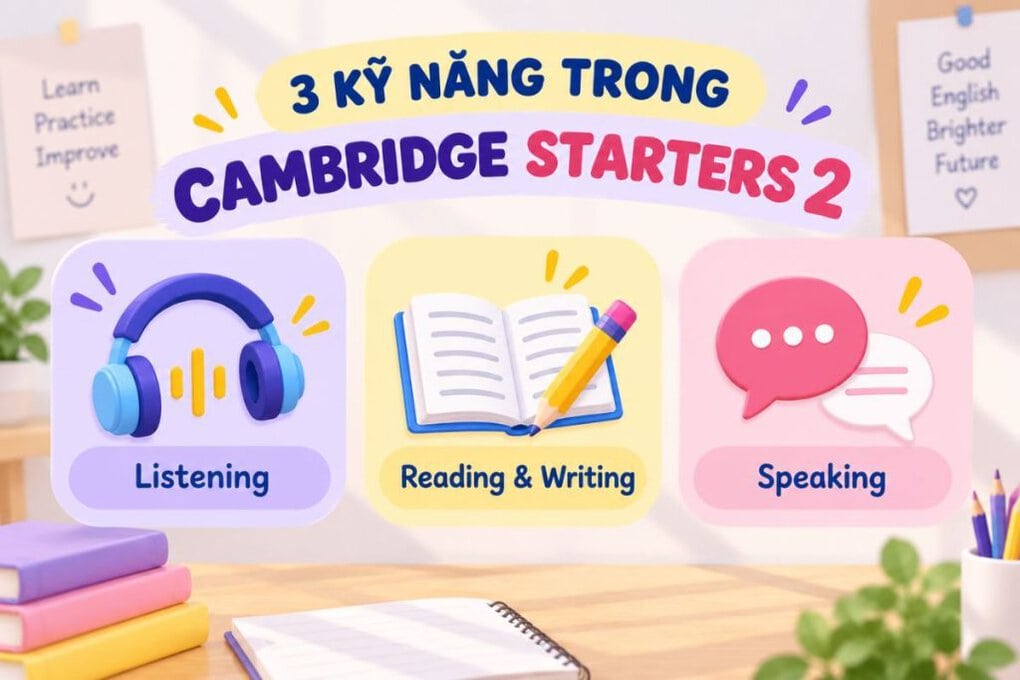
Cambridge Pre A1 Starters preparation generally focuses on three main skill areas.
Listening: Developing English Listening Skills
Listening is essential for helping children recognize familiar words and understand simple spoken English. With suitable practice materials, students can gradually become more familiar with pronunciation, intonation, and vocabulary used in everyday situations.
Listening activities at this level may ask students to:
- Listen to information and match it with pictures.
- Identify people or objects mentioned in an audio recording.
- Follow simple instructions and select the correct information.
- Recognize colors, numbers, positions, and descriptions of familiar things.
To improve listening performance, children should not try to translate every word they hear. Instead, they can focus on key details such as names, numbers, colors, and actions.
For example, when listening to a conversation about objects in a room, students can pay attention to the names of the objects and their locations to identify the correct answers.
If the selected edition of Starters 2 includes audio files, parents should use them alongside the printed exercises. Replaying difficult sections and reviewing mistakes after each attempt can help children improve their ability to recognize spoken English.
Reading & Writing: Building Basic Literacy Skills
At the Pre A1 level, children need to become familiar with reading individual words, understanding short sentences, and identifying simple information. Reading and writing activities help them connect vocabulary with pictures, meanings, and sentence structures.
Practice activities may include:
- Matching words or sentences with pictures.
- Reading short statements and identifying suitable answers.
- Completing sentences with missing words.
- Recognizing the correct spelling of familiar vocabulary.
- Finishing simple sentences according to instructions.
When completing these exercises, students should read the instructions carefully before answering. For gap-fill activities, they can use the surrounding words and pictures to understand the context instead of choosing an answer simply because it looks familiar.
Parents can also encourage children to record new vocabulary after each practice session. For example, if a lesson focuses on animals, students can write the English names next to pictures and create short sentences using those words.
This approach turns practice into an opportunity to reinforce knowledge rather than simply complete a worksheet.
Speaking: Practicing Simple English Communication
Speaking activities help children understand questions, identify information in pictures, and respond using basic English. For young learners, these exercises also provide opportunities to become more comfortable speaking in front of others.
Speaking practice at this level may involve:
- Naming objects, animals, or people in pictures.
- Answering short questions about familiar topics.
- Describing simple features of an image.
- Responding to questions with individual words or short sentences.
When practicing Speaking with Starters 2, parents should not expect children to produce long or complicated answers immediately. The priority is to help them understand questions, choose suitable vocabulary, and communicate their ideas clearly.
For example, when asked about the color of an object, a child might begin with a simple response such as “It is blue.” Parents can then extend the activity by asking about the object’s size, location, or purpose.
Frequent practice in familiar situations can gradually improve children’s confidence, responsiveness, and ability to use English naturally.
Starters 2 Review: Advantages and Limitations
To decide whether Starters 2 is the right resource, parents should consider both its potential benefits and the additional support children may need. A practice book can be useful for exam preparation, but it does not necessarily replace a complete English learning program.
Advantages of Starters 2
Helps children become familiar with Cambridge-style tasks
Practicing questions associated with the Pre A1 Starters format can help students understand task instructions and answer requirements. Familiarity with different question types may also reduce uncertainty during future practice sessions.
Provides opportunities to reinforce foundational knowledge
Listening, reading, writing, and speaking activities allow children to apply the vocabulary and sentence patterns they have learned. Through regular practice, students can identify what they already understand and which areas need further review.
Can support both home and classroom learning
Parents can use suitable exercises to reinforce learning after class. Teachers may also incorporate relevant activities into lessons, provide additional practice, or check students’ understanding of specific language points.
Makes progress easier to monitor with a study plan
When practice is divided into manageable sessions, parents can track completed activities and identify recurring mistakes. This information can help them adjust the learning plan according to the child’s needs.
Limitations to Consider
May not be suitable as the only resource for complete beginners
Children who have not yet developed basic vocabulary or sentence structures may struggle with exam-style exercises. In such cases, foundational English lessons should come first, followed by more intensive practice.
Listening practice requires appropriate audio resources
Printed exercises alone cannot fully support listening development. Parents should check whether the selected edition includes matching audio files and use them consistently when practicing listening tasks.
Speaking requires active communication
Completing written exercises does not automatically mean a child can communicate confidently in English. Students still need opportunities to listen to questions, respond aloud, and receive feedback on their language use.
Overall, Starters 2 is best considered a supplementary practice resource within a structured learning plan rather than a child’s only source of English instruction.
How to Use Starters 2 Effectively
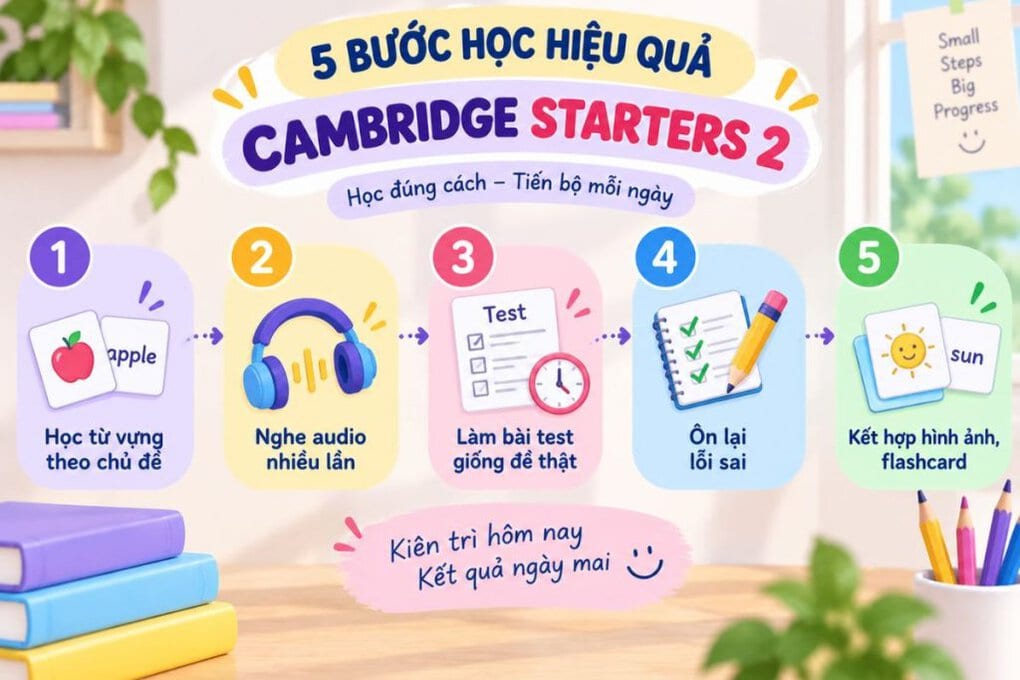
Choosing an appropriate book is only the first step. To get the most out of Starters 2, parents should establish consistent study habits that combine practice, review, and feedback instead of asking children to complete too many exercises in one sitting.
Review Vocabulary Before Starting
Before each session, spend a few minutes reviewing vocabulary related to the upcoming topic. Picture cards, flashcards, and simple guessing games can help children remember words without making the learning process feel too demanding.
Focus on unfamiliar words and commonly confused terms. Encourage children to use new vocabulary in short sentences to reinforce both meaning and usage.
Practice Each Skill with a Clear Goal
Instead of completing multiple tests consecutively, students can focus on one skill during each session. For example, one session can concentrate on Listening, another on Reading & Writing, and a separate session on Speaking.
This approach gives children enough time to understand instructions, correct mistakes, and reinforce what they have learned before moving on to new material.
Use Audio Files and Answer Keys Together
If the selected resource includes audio files and a matching answer key, use them to support self-assessment. Children should attempt listening exercises before checking the answers and complete reading and writing tasks independently whenever possible.
After checking their work, parents can help children understand why an answer was incorrect instead of simply pointing out the right option. Understanding the reason behind a mistake is generally more useful than memorizing an answer without context.
Keep Study Sessions Manageable
Young learners often benefit from short, engaging study sessions that match their attention span. Parents can begin with a brief practice period and adjust the duration according to the child’s concentration and progress.
There is no need to finish an entire practice book in a short period. A consistent routine that includes review and communication activities can help children maintain motivation over time.
Where to Find Starters 2 PDF and Answer Keys
When searching for Starters 2 PDF, parents often look for a digital copy of the book, audio files, and answer keys to support home practice. However, it is important to verify the edition and make sure the supplementary resources correspond to the exercises in the selected book.
A useful starting point is the official Cambridge English preparation page for Cambridge Pre A1 Starters. It provides information and preparation resources that can help parents understand the exam format and select suitable activities.
For materials specifically identified as Starters 2, prioritize sources that clearly identify the publication, edition, and permitted use of the content. Not every PDF available through a search engine contains the complete material or matches the audio and answer keys from a particular edition.
Before using a resource, check the following:
- Student Book: Confirm the exact title and edition.
- Audio files: Make sure the recordings correspond to the exercises in the book.
- Answer Key: Check that the answers match the material being used.
- Additional practice materials: Choose exercises that address the child’s weaker skills.
Students who need more practice can explore other Cambridge Pre A1 Starters resources appropriate to their level. Regardless of the chosen materials, checking the source and matching the resources carefully can make exam preparation more organized and effective.
Important Tips Before Children Start Practicing
Before introducing Starters 2, parents should identify the child’s learning objectives. If a child is new to English, focus on vocabulary, listening comprehension, and basic sentence patterns. If the child already has a foundation, practice tests can help reinforce knowledge and build familiarity with exam-style tasks.
Parents should also avoid judging a child’s ability based on the score from a single practice test. Performance may be affected by familiarity with the question types, concentration, and understanding of the instructions.
Keeping a record of recurring mistakes can help parents monitor progress. If a child frequently confuses vocabulary, struggles to understand questions, or feels uncomfortable speaking, additional practice should focus on those specific areas.
Starters 2 is likely to be more useful when incorporated into a suitable learning plan that combines foundational knowledge, regular practice, and constructive feedback. This approach helps children become familiar with Cambridge-style tasks while gradually developing their ability to use English.
Frequently Asked Questions About Starters 2
What age is Starters 2 suitable for?
Starters 2 may be suitable for young learners who are studying basic English and preparing for Cambridge Pre A1 Starters. However, parents should consider the child’s current vocabulary, reading comprehension, and confidence when using English rather than relying on age alone.
Does Starters 2 include an answer key?
The available supplementary materials depend on the edition and source. When searching for Starters 2 Answer Key or Starters 2 answers, check the book title and edition to ensure the answer key matches the exercises. If an answer key is unavailable, a teacher can help review the child’s work.
Can children study Starters 2 at home?
Yes. Children can use Starters 2 for home practice if they have an appropriate study plan and the necessary resources. Parents should encourage them to read instructions carefully, use audio files for listening practice, and review mistakes. Speaking practice should also include opportunities for interaction and feedback.
Can Starters 2 replace an English textbook?
Starters 2 should not be considered a complete replacement for an English textbook. Practice books mainly help children apply their knowledge and become familiar with question formats, while structured textbooks develop language skills progressively. Combining both types of resources can create a more balanced learning experience.
Which resources can be used with Starters 2?
Parents can combine Starters 2 with topic-based vocabulary materials, age-appropriate English listening activities, and simple speaking exercises. For additional exam preparation, explore resources from Cambridge English and select activities that match the child’s current level and learning goals.
Keywords:
- Starters 2 PDF
- Starters 2 Answer Key
- Starters 2 answers
- Cambridge Starters 2
- Cambridge Pre A1 Starters practice tests