
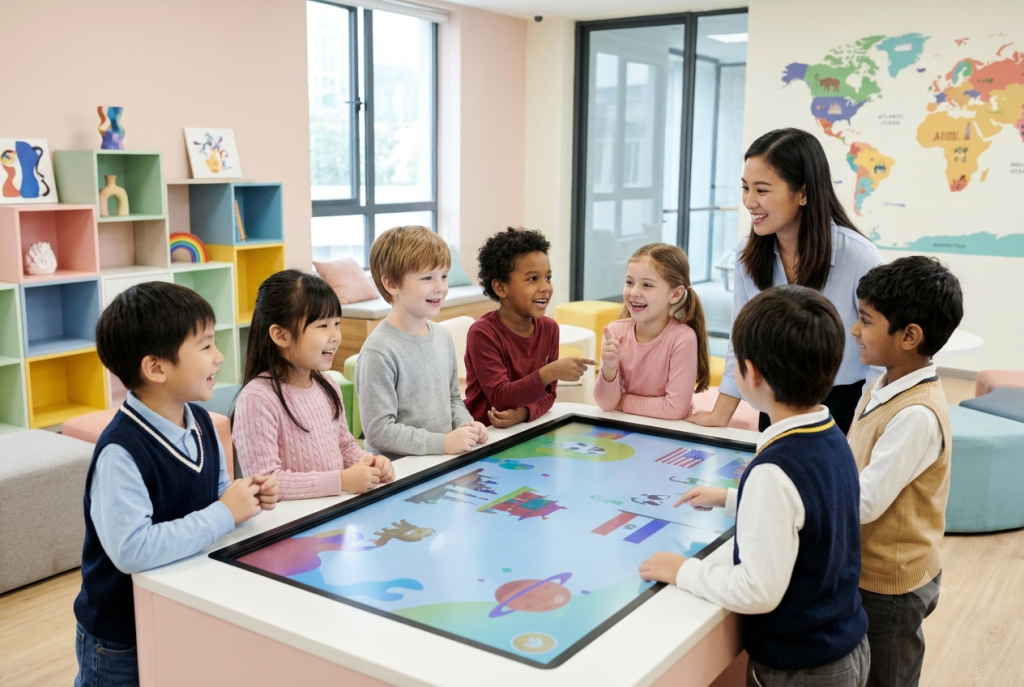
In today’s globalized world, preparing a strong linguistic foundation for children during their early developmental years has become a top priority for many families. Exposing children to a foreign language early helps them absorb language naturally while supporting cognitive growth, self-confidence, and cross-cultural communication abilities. However, choosing a suitable English center for kids among dozens of educational organizations can be a challenging task for parents.
Each educational system offers distinct advantages regarding curriculum design, facility standards, and skill development orientation. To assist parents in finding an ideal learning environment for their children, this article provides detailed criteria, reviews reputable centers, and addresses common parental questions.
Importance of Choosing an English Center for Kids Early
Educational research consistently demonstrates that early childhood and primary school years represent an optimal period for language acquisition. Enrolling children in a quality English center for children offers several long-term development advantages that extend far beyond simple classroom performance.

Natural Language Reflex Development in an English Center for Kids
During early childhood, the human brain possesses a remarkable capacity for language absorption through listening, imitation, and interaction. When children study in an environment where they are exposed entirely or primarily to English, they develop natural communication reflexes without relying on mental translation from their mother tongue. This natural exposure supports accurate pronunciation, natural rhythm, and authentic intonation from the very start.
Building Self-Confidence Through English Centers for Kids
Modern language programs designed for young learners move away from rigid traditional instruction focused solely on rote memorization. Instead, children acquire language skills through interactive games, songs, storytelling, and collaborative group activities. This engaging atmosphere encourages children to express their thoughts boldly, socialize with peers, and build enduring confidence in daily communication.
Broadening Cognitive Skills and Cultural Awareness
Learning a new language opens a window to broader global perspectives and diverse cultures. Through dynamic lesson activities and multicultural learning materials, children gain exposure to diverse cultural aspects, refine observation skills, and enhance their cognitive adaptability when interacting with surrounding environments.
Comprehensive Reviews of Notable English Centers for Kids
To give parents a thorough overview, the following sections review major language instruction brands that receive significant attention from Vietnamese families.
VUS – Vietnam USA Society English Centers
VUS is an established educational system in Vietnam with an extensive branch network across major cities. Their study programs are systematically structured according to age groups, ranging from preschool to primary and teenage levels.
- Curriculum Structure: Developed in collaboration with international educational publishers. The curriculum integrates preparation for international certificates such as Cambridge Starters, Movers, and Flyers, establishing clear learning milestones.
- Teaching Methodology: Implements active learning methodologies combining classroom instruction with digital practice tools at home. Students practice listening, speaking, reading, and writing skills in a balanced framework.
- Key Highlights: Experienced teaching staff, modern classroom environments, and detailed progress tracking systems that keep parents well-informed about their child’s development throughout the course.
British Council – International Language Education
As the United Kingdom’s international organization for educational opportunities and cultural relations, the British Council provides an international-standard learning environment with high academic benchmarks.
- Curriculum Structure: Designed by language experts to focus on practical communication skills, academic readiness, and critical thinking capabilities for young learners.
- Teaching Methodology: Encourages active student participation through group discussions, collaborative problem-solving, and project-based learning in an English-rich setting.
- Key Highlights: Fully certified native-speaking teachers who create an open, inclusive classroom environment where individual student differences are valued and nurtured.
ILA Vietnam – Combining Language and Life Skills
ILA is widely recognized for combining language learning with 21st-century skill development to prepare students for future academic and personal success.
- Curriculum Structure: Employs project-based learning methodologies where children apply vocabulary and grammar to real-world tasks rather than simple memorization.
- Teaching Methodology: Develops essential life skills alongside language proficiency, including critical thinking, creativity, communication, collaboration, self-management, and digital literacy.
- Key Highlights: Dynamic classroom layouts that encourage students to present projects confidently in front of peers and explain their ideas clearly during interactive sessions.
Kyna English – Flexible Online Learning Platform
For families seeking to optimize travel time or supplement classroom study at home, Kyna English offers a flexible online learning solution designed specifically for young learners.
- Curriculum Structure: Lessons feature engaging animations, interactive games, and curriculum alignment with Cambridge proficiency standards for consistent skill evaluation.
- Teaching Methodology: Offers one-on-one or small group online classes, enabling instructors to provide personalized attention to every student.
- Key Highlights: Flexible study schedules, affordable pricing structures, and convenient home access that allows parents to observe learning progress easily during daily study sessions.
Apollo English – Early Language Reflex Environment
Apollo English stands as one of the pioneering institutions in early English education, focusing on holistic child development through language immersion.
- Curriculum Structure: Tailored for specific age groups, helping children build language reflexes naturally through subject-integrated learning (learning English through math, science, and arts).
- Teaching Methodology: Uses the LETS (Learning English Through Subjects) framework, treating English as a medium for discovering knowledge rather than just an academic subject.
- Key Highlights: Colorful classroom designs equipped with interactive learning technology that maintains student interest and enthusiasm throughout every session.
Essential Criteria for Selecting an English Center for Kids
Because every child possesses distinct personality traits, ages, and learning paces, answering the question of what defines a good English center for kids requires evaluating specific selection criteria.
Age Appropriateness in Programs for an English Center for Kids
An effective curriculum must align with a child’s psychological and cognitive developmental stages:
- English Center for 2 Year Olds and 3 Year Olds: Programs for this toddler stage should focus on physical movement, songs, and interactive play to familiarize children with English sound patterns naturally without academic pressure.
- English Center for 4 Year Olds and 5 Year Olds: This preschool stage is suitable for expanding vocabulary around familiar topics, building basic listening and speaking reflexes, and introducing letter recognition through fun activities.
- Primary School Age: Programs should emphasize sentence structure accuracy, reading and writing fundamentals, and preparation for appropriate young learner certifications to track progress.
Teacher Quality at an English Center for Kids
Instructors directly inspire young learners and shape their pronunciation habits. Parents should carefully evaluate teacher qualifications and teaching styles:
- Foreign teachers should hold recognized international teaching credentials such as TESOL, CELTA, or TEFL alongside formal degrees.
- Instructors need practical experience with young children, patience, enthusiasm, and the ability to maintain engagement during lessons through positive encouragement.
Learning Facilities and Environment
Physical classroom settings play an important role in stimulating young minds and encouraging creative thinking:
- Classrooms should be safe, well-ventilated, well-lit, and equipped with visual learning tools and age-appropriate furniture.
- Class sizes should remain balanced (typically 10 to 15 students) to ensure teachers can give adequate individual attention to every child.
English Center Tuition Fees and Financial Planning
Carefully reviewing English center tuition fees across different providers helps families plan long-term educational budgets effectively. Fees vary based on teacher credentials, facility quality, class sizes, and supplementary resources provided. Choosing an option that fits a family’s budget ensures continuous, uninterrupted learning for the child over multiple years.
Practical Advice for Supporting Children in Language Learning
Selecting a reputable educational institution is one key component of language growth; parental involvement also plays a vital role in reinforcing learning outcomes.
Creating a Home Practice Environment
Parents do not need to be fluent in English to support their children effectively. Creating a supportive home learning environment can be achieved through simple daily practices:
- Listening to cheerful English children’s songs together every day during playtime or commute time.
- Watching age-appropriate educational animation programs or reading illustrated storybooks in English.
- Encouraging children to share new vocabulary words or songs learned during class without turning practice into an interrogation.
Avoiding Pressure and Encouraging Progress
Language acquisition occurs most effectively in a supportive, pressure-free atmosphere. Parents should avoid overly strict expectations, heavy homework pressure, or comparing their child’s progress with peers. Offering genuine encouragement for incremental improvements helps children maintain enthusiasm for learning.
Maintaining Communication with Language Instructors
Regular communication with center staff helps parents stay informed about their child’s strengths and areas needing practice. Attending parent-teacher meetings or reviewing periodic progress reports provides clear visibility into learning trajectories and helps identify areas where extra support at home might be helpful.
Key Considerations for Choosing the Right Learning Environment
When selecting a language school for a child, parents should evaluate how well the curriculum aligns with their child’s individual personality and learning style. Some children thrive in high-energy, activity-filled environments, while others benefit from structured, project-oriented settings.
Assessing Class Sizes and Student Interaction
Class size significantly affects how much speaking practice each child receives during a lesson. Smaller group sizes generally allow teachers to monitor individual pronunciation, answer questions promptly, and tailor activities to different learning speeds among students.
Evaluating Technology Integration in Classrooms
Modern centers increasingly incorporate interactive whiteboards, learning apps, and digital practice portals. These technological tools can make learning more dynamic, provided they complement rather than replace meaningful human interaction between teachers and students in the classroom setting.
Observing Trial Lessons and Demonstration Classes
Many educational providers offer trial classes or placement assessments prior to formal enrollment. Participating in a demonstration class gives parents a firsthand look at teaching styles, classroom atmosphere, safety standards, and how comfortably their child interacts with instructors and peers.

Long-Term Educational Pathways and Certification Goals
Parents should also consider whether the center offers a continuous learning pathway as their child grows. Institutions that provide seamless transitions from preschool programs to primary preparation for Cambridge English Qualifications help maintain learning momentum and eliminate the stress of switching centers frequently.
Investing in early foreign language education provides children with valuable communication tools and cognitive benefits. Choosing a supportive learning environment fosters long-term curiosity and natural language development. Taking time to research options, visit facilities, and observe trial classes allows parents to make informed decisions that benefit their child’s educational journey.
Frequently Asked Questions About an English Center for Kids
Is an English center for kids suitable for toddlers aged 2 to 3 years?
Children aged 2 to 3 years experience rapid overall language development. Exposure to English at this stage builds natural listening reflexes. However, activities should remain play-based through music, colors, and storytelling rather than formal instruction.
What should parents prioritize in an English center for 4 year olds?
When choosing a program for an English center for 4 year olds, parents should look for experiential learning methods, encouraging teachers, and dynamic classroom atmospheres. Programs should focus on listening, speaking reflexes, and visual vocabulary recognition.
Are online English center reviews for kids reliable?
Reading English center reviews for kids on social media platforms and forums offers helpful initial context. However, because every child’s learning journey varies, online reviews should be combined with direct center visits and trial class participation.
How can parents determine if an English center for kids fits their child?
A clear indication of a suitable program is a child’s enthusiasm before class and confident use of learned words at home. If a child shows persistent stress or fear, parents should discuss adjustments with teachers or explore alternative learning environments.
Keywords:
- English center tuition fees
- English center for 4 year olds
- English center for children
- English center reviews for kids
- Good English center for kids