

Establishing a strong educational foundation in young learners requires effective learning tools and realistic assessment resources. Within the Cambridge English Qualifications roadmap for children, the Pre A1 Starters examination serves as the introductory stage for elementary school students (typically aged 6 to 8). This initial level introduces children to standardized international language evaluations, laying the groundwork for subsequent milestones such as A1 Movers and A2 Flyers.
To help young candidates enter the test center with minimal stress and maximum familiarity, selecting authentic practice materials is a top priority for parents and educators. Among the widely utilized test prep volumes available today, the cambridge starters 1 collection commands significant attention due to its accurate alignment with official test formats and practical utility.
This comprehensive cambridge starters 1 review provides a thorough examination of the publication’s content, breaks down each skill module, evaluates key advantages and limitations, and outlines a structured study methodology designed to maximize candidate readiness.
Overview of the Cambridge Starters 1 Publication
Publication Details and Design Format
The cambridge english starters 1 volume (also referred to alongside foundational series like cambridge english movers 1) is a curated collection of practice papers created according to official Pre A1 Starters exam specifications. Published by Cambridge University Press, this resource aims to help young candidates practice under realistic test conditions and assess their skill level prior to registering for official test sessions.
- Publication Title: Cambridge Starters 1
- Target Qualification Level: Pre A1 Starters (Cambridge English Qualifications for Young Learners)
- Target Student Profile: Elementary school candidates (ages 6 to 8) preparing for standardized English evaluations.
- Package Components: Full-length practice tests, companion audio tracks, printed transcripts, and an integrated answer key.
- Primary Learning Objective: Exam format simulation, skill diagnostic, and practical test preparation.
Unlike comprehensive language coursebooks that introduce thematic vocabulary or structural grammar lessons unit by unit, the starters 1 book functions purely as an assessment and exam preparation tool. Students do not learn new theoretical lessons; instead, they apply their existing language knowledge to complete simulated test tasks.
Core Educational Objectives
Utilizing the starters 1 practice volume supports specific educational goals designed to foster well-rounded language performance:
- Format Familiarity: Helps candidates recognize exact question structures, page layouts, visual prompt styles, and task instructions used in official Cambridge examinations.
- Skill Application: Encourages students to practice visual observation, auditory keyword extraction, short text reading, and basic oral interactions.
- Diagnostic Evaluation: Allows parents and instructors to review candidate scores, identifying strong skill areas as well as vocabulary or grammatical gaps.
- Confidence Building: Demystifies the testing environment, enabling candidates to approach their official exam with emotional composure and clarity.
Detailed Cambridge Starters 1 Review Across Test Modules
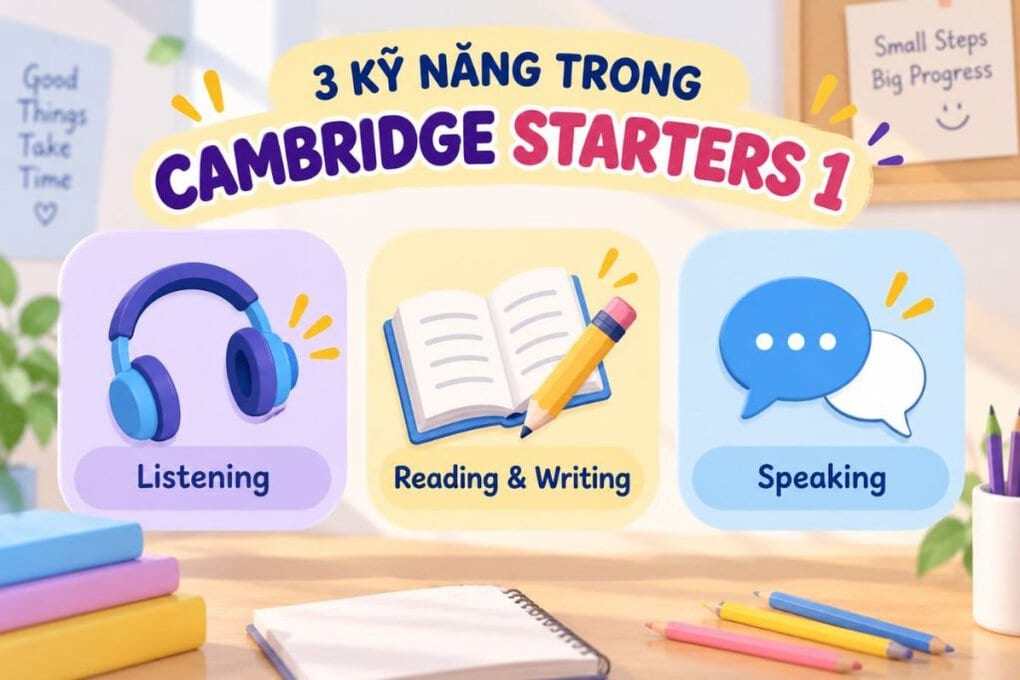
The Pre A1 Starters examination evaluates candidate proficiency across three core papers: Listening, Reading & Writing, and Speaking. Each paper inside the practice volume mirrors official test specifications precisely.
Evaluating Listening in This Cambridge Starters 1 Review
The listening module is often the most emotionally engaging yet challenging paper for young children. Audio tracks feature natural speech rates, clear native pronunciation, and colorful visual prompt sheets depicting familiar themes such as family, school, pets, toys, sports, colors, and numbers.
Standard task formats within the listening section include:
- Listen and draw lines: Candidates listen to descriptive dialogues detailing actions or object locations within a large visual scene, drawing lines from name labels to the correct figures.
- Listen and record short details: Extracting specific information, such as numbers or spelled names, to complete written notes.
- Multiple-choice image selection (Tick the box): Listening to short conversational prompts and selecting the correct image option (A, B, or C).
- Listen and color: Following spatial and descriptive directions to color specific items within a line-art illustration.
Audio recordings present clear articulation suited for young learners. However, items often incorporate conversational distractors, requiring candidates to pay close attention to complete statements rather than selecting answers based on isolated words.
Evaluating Reading and Writing in This Cambridge Starters 1 Review
The Reading & Writing paper measures letter recognition, core vocabulary recall, and basic sentence comprehension. Tasks rely heavily on visual prompts to maintain engagement:
- Matching words to images: Inspecting illustrated objects and marking tick or cross boxes next to descriptive labels.
- Verifying visual accuracy (Yes/No): Reviewing a large scene, reading descriptive statements, and writing “Yes” or “No”.
- Letter unscrambling: Observing visual prompts and rearranging jumbled letters to spell target words correctly.
- Passage gap-filling: Reading a short text with visual clues and choosing missing words from a labeled bank.
- Extracting text information: Answering short questions based on a picture narrative using single-word written answers.
Visual cues allow candidates to infer meaning effectively. However, common candidate errors typically involve spelling slips or misunderstanding basic word order in short sentences.
Evaluating Speaking in This Cambridge Starters 1 Review
The Speaking module involves a direct face-to-face dialogue with an oral examiner, which can occasionally induce nervousness in young candidates. The practice volume provides full visual prompt cards matching authentic exam tasks:
- Locating visual objects: Responding to examiner prompts by pointing out specific objects or characters in a master scene.
- Placing object cards: Position small individual card prompts onto designated locations within the master illustration based on spatial instructions.
- Answering descriptive questions: Responding to short oral questions regarding object color, quantity, or ongoing actions depicted in the visual scene.
- Personal interaction: Answering simple personal inquiries regarding age, family members, favorite foods, or daily hobbies.
The oral paper does not demand complex grammatical constructions; rather, it prioritizes natural response reflexes, clear pronunciation, and conversational confidence.
Analyzing Sample Test Walkthroughs and Practice Papers
To build consistent test-taking habits, starting with structured practice papers is essential. When introducing candidates to initial practice materials, tutors and parents should guide students through a disciplined sequence.
Candidates should prepare all required materials prior to starting a paper, including sharp pencils, erasers, colored pencils for listening tasks, and companion audio tracks. During practice sessions, students should be encouraged to complete test sections continuously without unnecessary pauses to build stamina.
Upon completing a test paper, reviewing results against official solution keys helps identify correct answers and recurring errors instantly. For listening sections, if a candidate misses a specific item during their first attempt, replaying the audio segment while reviewing the printed transcript allows them to discover missed keywords independently.
Strategic Value of the Starters 1 Answer Key and Audio Tracks
Role of the Correction Key in Independent Revision
An essential factor facilitating home preparation is the inclusion of a reliable correction guide. Access to an official starters 1 answer key provides accurate solutions for all Listening and Reading & Writing test papers.
Utilizing the solution guide effectively delivers several practical benefits:
- Efficient Grading: Allows parents and tutors to check candidate responses rapidly without extensive manual verification.
- Targeted Error Diagnosis: Pinpoints specific vocabulary groups or task formats where the candidate experiences persistent difficulty.
- Progress Monitoring: Enables families to record scores across sequential tests, establishing clear visual evidence of skill growth over time.
However, parents should ensure candidates do not consult answer keys prior to test completion. Practice papers yield accurate diagnostic value only when completed independently under realistic conditions.
Effective Integration of Digital Resources
Combining printed test pages with high-quality digital audio files enhances auditory learning and keyword recognition.
During listening practice, instructors should implement a two-pass listening approach:
- First Pass: The candidate completes the listening paper under strict exam conditions without stopping the audio track.
- Second Pass: The candidate reviews missed items while listening to the audio again alongside printed transcript text to verify pronunciation patterns and connected speech.
Strengths and Limitations in This Cambridge Starters 1 Review
Evaluating both positive features and practical constraints provides a balanced perspective for educators and parents considering this publication.
Key Advantages of the Practice Volume
- Strict Exam Alignment: Page layouts, question formats, and illustration styles match official Pre A1 Starters specifications accurately.
- Engaging Visual Design: Bright, clear artwork maintains student interest and reduces test anxiety for young children.
- High-Quality Audio Production: Clear voice recording, natural pacing, and authentic native accents support effective listening development.
- Convenient Self-Study Integration: Combined test papers, printed transcripts, and correction keys streamline home revision routines.
Practical Considerations for Learners
- Absence of Explicit Grammar Lessons: The volume consists exclusively of practice test papers and does not include structural grammar rules or thematic vocabulary lists.
- Limited Answer Explanations: The correction guide provides correct keys but does not explain underlying grammatical principles, requiring instructor guidance.
- Requires Interactive Partner for Speaking: Oral test components cannot be completed entirely independently; candidates require a parent or tutor to act as examiner.
Target Learner Profile for Starters 1
This practice publication delivers maximum value when introduced at the appropriate point in a student’s learning journey.
Ideal candidate profiles include:
- Elementary school students preparing to sit for the official Pre A1 Starters exam within one to three months.
- Learners who have completed foundational Pre A1 coursebooks and need to practice standardized test formats.
- Parents seeking a reliable benchmark tool to evaluate their child’s current English proficiency at home.
- Language centers and tutors requiring authentic assessment papers to measure student progress.
Situations where alternative resources are recommended first:
- Children who are complete beginners and have not yet acquired basic English vocabulary (colors, animals, numbers, family).
- Students who struggle with basic alphabet letter recognition or simple single-word reading.
- Families looking for a comprehensive step-by-step coursebook rather than exam practice papers.
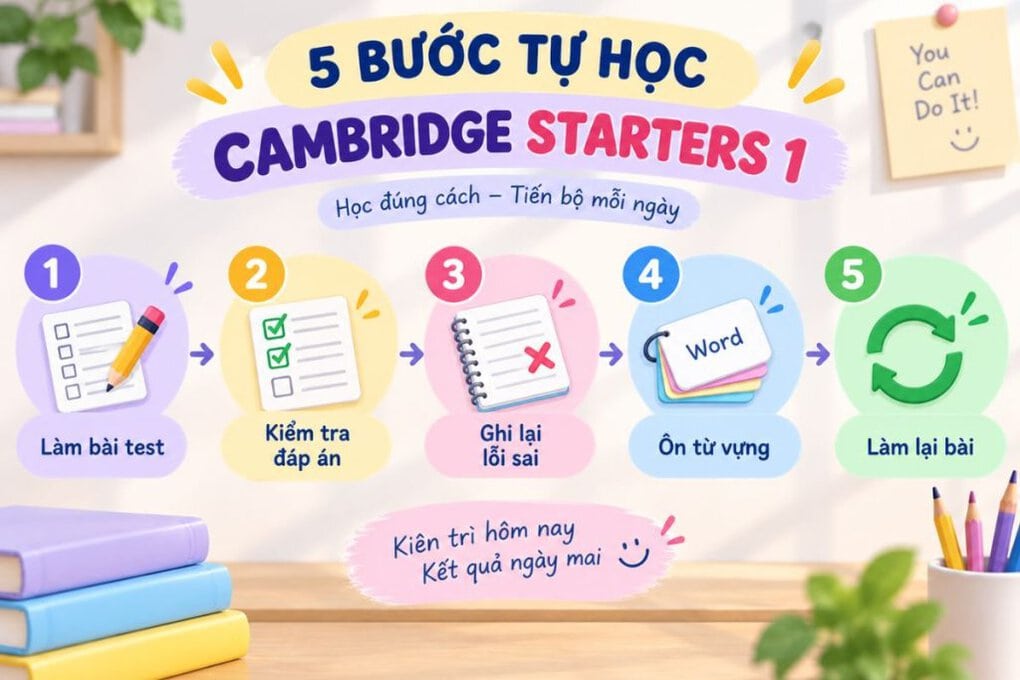
Five-Step Study Methodology for Cambridge Starters 1
Implementing a structured study workflow ensures students gain maximum learning benefit from every practice paper within the publication.
Step 1: Simulate Timed Exam Conditions
Establish a quiet learning environment free from distractions. Set strict time limits matching official exam rules and guide candidates to work independently without checking dictionaries or answer keys.
Step 2: Score Responses and Conduct Error Analysis
Check completed test papers using the official correction guide. Categorize missed questions into root causes: vocabulary gaps, spelling slips, or misread instructions.
Step 3: Conduct Guided Audio and Transcript Review
For incorrect listening items, replay relevant audio tracks while reviewing printed transcript text. Help the candidate identify how distractors were presented and locate key auditory clues.
Step 4: Record New Vocabulary and Structural Patterns
Maintain a dedicated vocabulary notebook where candidates record unfamiliar words or sentence patterns discovered during test review. Adding simple hand-drawn illustrations next to new words reinforces retention.
Step 5: Retake Test Papers After Spaced Interval
Allow one to two weeks between initial test completion and re-testing. Having candidates retake previously completed papers verifies whether they have corrected earlier mistakes and consolidated new vocabulary.
Final Synthesis of the Cambridge Starters 1 Review
The cambridge starters 1 publication stands as a valuable assessment tool for young learners preparing for the Pre A1 Starters examination. Its faithful replication of official test formats, engaging visual artwork, clear audio recordings, and integrated answer keys offer candidates a practical framework to build test confidence and refine language skills.
When combined with a structured study routine and supportive guidance from parents or educators, this practice volume helps young students transition smoothly from basic classroom learning to success on official exam day.
Frequently Asked Questions About Cambridge Starters 1 Review
Does Cambridge Starters 1 include an official answer key?
Yes, standard editions of this practice volume include a complete solution guide at the back of the book, enabling parents and tutors to verify student responses easily.
How can companion audio files be accessed for listening practice?
Audio tracks are typically provided via digital download codes or accompanying audio CDs included with official publication packages.
How many full practice tests are included in Starters 1?
Standard publication editions typically feature three to four complete practice tests covering Listening, Reading & Writing, and Speaking modules.
Can young learners use Starters 1 for independent self-study?
Students who already possess basic reading skills can complete listening and reading papers independently, though parental or tutor guidance is recommended for grading and speaking practice.
What preparation material should candidates use after completing Starters 1?
Upon completing this volume successfully, candidates can proceed to subsequent practice volumes in the series (such as Starters 2) or transition to A1 Movers preparation materials depending on their assessment performance.
Từ khóa:
- starters 1
- cambridge starters 1
- cambridge english starters 1
- starters 1 book
- starters 1 answer key