

In the Cambridge English Qualifications framework for young learners, the A1 Movers exam serves as a crucial bridge. Positioned directly after Pre-A1 Starters, this level marks a significant milestone where primary school students transition from simple vocabulary recognition to constructing complete sentences, understanding short narrative texts, and engaging in natural oral communication.
To achieve optimal results on exam day, candidates require focused practice with authentic test materials alongside standard coursework. Among the exam preparation publications available for educators and parents, Cambridge Movers 2 is widely recognized for its accurate alignment with official test specifications and candidate expectations.
Understanding how to utilize this collection effectively, maximize the correction tools, and structure timed study sessions can substantially enhance student performance. This in-depth movers 2 review details the book content, key advantages, limitations, answer key integration, and proven study methodologies for young candidates.
Overview of Cambridge Movers 2
What is Cambridge Movers 2?
The cambridge english movers 2 volume is a curated collection of full-length practice tests designed according to the official specifications of the Cambridge A1 Movers examination. Unlike foundational coursebooks that present new grammatical rules or thematic vocabulary units sequentially, this publication functions specifically as an assessment and exam preparation resource.
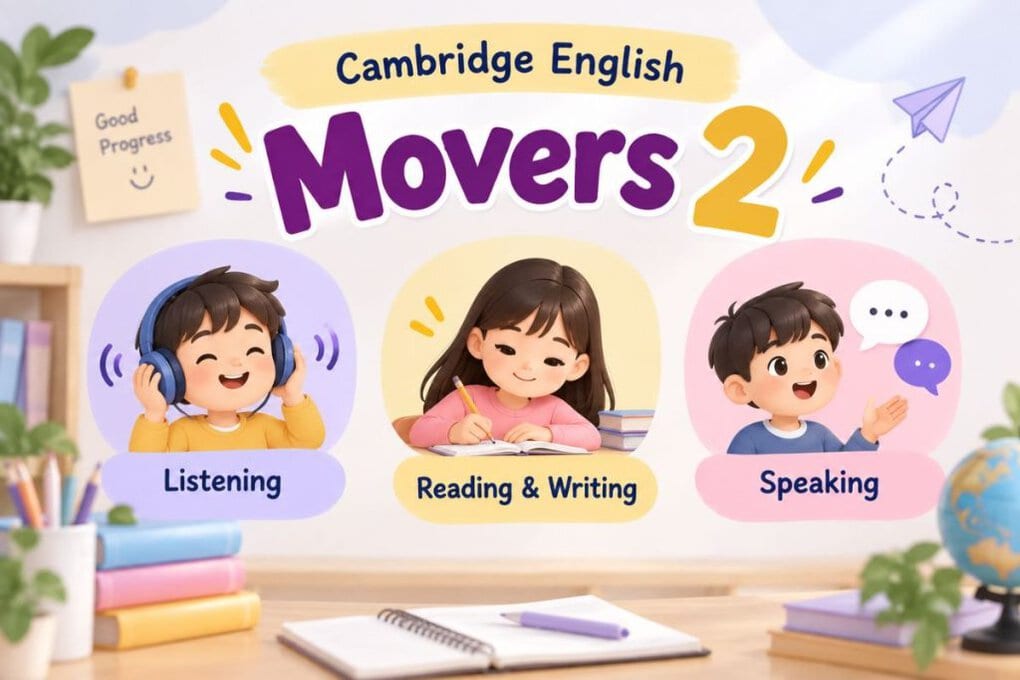
Each full practice test within the movers 2 book contains all three official modules: Listening, Reading & Writing, and Speaking. Working through realistic test papers allows learners to consolidate acquired vocabulary, refine grammatical skills, and build familiarity with test timing and task instructions.
Target Audience for This Resource
Because this volume emphasizes exam practice rather than initial instruction, it delivers maximum educational value to specific groups of learners:
- Students aged 7 to 11: Elementary school children taking bilingual curriculum courses or preparing for official Cambridge qualifications.
- Graduates of Starters or Movers 1: Candidates who have mastered foundational vocabulary (approximately 400 to 600 core words) and wish to advance their skill level.
- Candidates in final exam preparation: Students who are one to two months away from their test date and need to build stamina under timed conditions.
- Parents supporting home revision: Guardians seeking structured practice materials with reliable correction guides to monitor their child’s learning trajectory.
- Teachers and language institutions: Educators looking for realistic assessment papers to evaluate student progress or assign target practice homework.
Note: Candidates who are new to English or who exhibit significant grammatical gaps should focus on core coursebooks prior to working through full practice papers.
Detailed Movers 2 Review Across Test Modules
An official A1 Movers assessment evaluates candidates across three skill areas. Every practice paper inside cambridge movers 2 replicates official exam formatting to support comprehensive preparation.
Listening Module
The listening section features colorful visual prompts paired with clear audio recordings delivered in standard native accents. Pacing is carefully managed to remain accessible for young candidates while accurately simulating test conditions.
Common task formats within this paper include:
- Matching names to visual figures: Listening to spoken descriptions of actions, clothing, or physical placement, then drawing lines from name labels to correct figures within a master illustration.
- Recording short details: Extracting specific information such as numbers, spelled names, dates, or simple nouns to complete missing notes.
- Multiple-choice image selection (Tick the box): Listening to short conversational exchanges and selecting the correct image option (A, B, or C) corresponding to each prompt.
- Coloring and simple writing: Combining visual scanning with precise listening comprehension to color specified objects correctly or write basic labels within an illustration.
Listening prompts incorporate familiar contexts such as classroom activities, outdoor sports, home life, animal habitats, and daily routines. Test items often include secondary detail clues (distractors), requiring candidates to listen to complete statements rather than marking answers based on isolated words.
Reading and Writing Module
The Reading & Writing paper evaluates vocabulary recall, structural comprehension, and written accuracy. Tasks progress logically from foundational matching to creative sentence construction.
Standard task types include:
- Matching terms to descriptive definitions: Reviewing vocabulary labels accompanied by images and linking them to corresponding definition statements.
- Verifying statement accuracy (Yes/No): Examining a central illustration, reading descriptive statements, and marking “Yes” or “No” based on visual evidence.
- Completing conversational exchanges: Selecting the most appropriate conversational response from multiple options to complete a short dialogue between two speakers.
- Filling in passage blanks: Selecting appropriate words from a word bank to complete a narrative passage, then choosing a fitting title for the story.
- Extracting information to complete sentences: Reading a longer narrative and filling in missing summary elements using one, two, or three words directly from the text.
- Formulating written statements: Looking at visual prompts, completing sentence frames, and writing original descriptive statements about pictured scenes.
Young learners frequently encounter challenges with word order or spelling errors in written responses. Consistent practice using movers 2 helps students reinforce grammatical accuracy and refine scanning skills.
Speaking Module
The Speaking paper involves a face-to-face interaction with an oral examiner. For young candidates, speaking directly to an unfamiliar adult can occasionally cause mild anxiety.
The test preparation material provides complete visual prompts for all four speaking components:
- Identifying visual differences: Examining two similar illustrations and describing differences in object placement, color, count, or action.
- Narrating a sequential story: Observing a sequence of four picture frames, understanding the narrative arc, and telling a simple story using connected sentences.
- Finding the visual anomaly (Odd one out): Reviewing four sets of image groups, identifying the picture that does not belong in each set, and providing a short explanation.
- Responding to personal inquiry: Answering open-ended questions about personal routines, hobbies, school subjects, family members, or weekend activities.
Practicing oral prompts helps candidates develop natural spoken responses, expand simple one-word answers into complete statements, and build confidence ahead of a live movers 2 speaking test.
Analyzing the Movers 2 Answer Key and Audio Components
Significance of the Movers 2 Answer Key for Self-Study
A key feature of official Cambridge preparation materials is the inclusion of complete correction keys. Access to the movers 2 answer key provides reliable solutions for every test item in the collection.
Utilizing official movers 2 answers offers substantial advantages for independent study:
- Efficient grading: Parents and tutors can evaluate practice papers quickly and calculate representative score ranges.
- Targeted error identification: Comparing student responses with correct solutions highlights specific vocabulary gaps or grammatical misunderstandings.
- Tracking performance growth: Recording test scores across multiple practice papers provides visual evidence of skill development over time.
To maximize learning value, candidates should complete practice papers independently under timed conditions before consulting movers 2 answers.
Maximizing Listening Skills with Companion Audio Files
The test collection is paired with high-quality audio recordings featuring authentic pronunciation, stress patterns, and natural intonation.
Regular practice with companion audio files delivers multiple benefits:
- Accustoms learners to natural native speech rates and varied regional accents.
- Builds keyword extraction skills within spoken contexts.
- Allows repeated listening to difficult audio segments during post-test correction sessions.
Evaluating Advantages and Limitations of the Movers 2 Book
Reviewing both strengths and practical constraints helps parents and educators integrate the movers 2 book effectively into study routines.
Key Benefits of Using This Practice Resource
- High test alignment: Practice papers reflect official Cambridge assessment criteria, task formats, and difficulty levels accurately.
- Engaging visual design: Bright, clear illustrations keep young learners engaged while maintaining focus during test simulation.
- Comprehensive skill coverage: Assesses Listening, Reading & Writing, and Speaking skills to prevent lopsided development.
- Structured self-study support: Integrated answer keys and audio resources simplify home revision for families and independent tutors.
Important Factors to Consider Before Studying
- Absence of theoretical explanations: The volume consists of practice tests and does not include explicit grammar lessons or unit vocabulary lists.
- Assumes prior foundational knowledge: The material requires a solid foundation in A1 level vocabulary and sentence patterns prior to test practice.
- Requires speaking partner interaction: Oral test prompts require interactive practice with an instructor, parent, or peer to achieve optimal results.
Five-Step Strategy for Mastering Cambridge Movers 2
Implementing a structured study plan ensures students gain maximum learning benefit from every practice paper within cambridge movers 2.
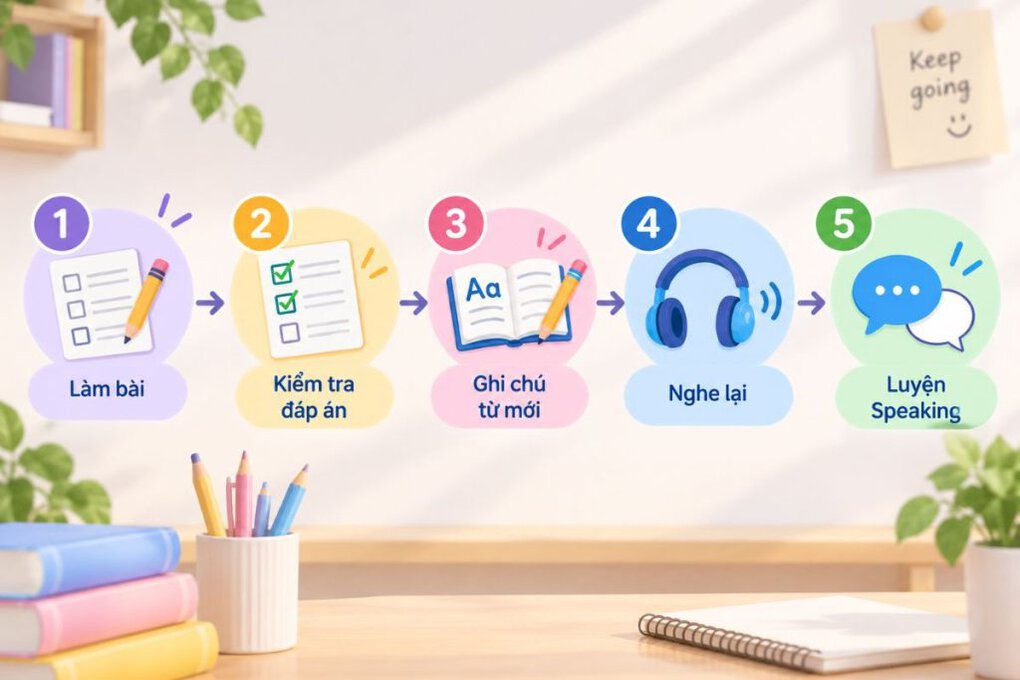
Step 1: Simulate Official Test Conditions
Establish a quiet learning environment free from distractions and adhere strictly to official time limits:
- Listening timing: Approximately 25 minutes (guided by audio duration).
- Reading & Writing timing: Exactly 30 minutes.
- Guidelines: Candidates must complete test papers without consulting dictionaries, checking answer keys, or taking unearned breaks.
Step 2: Grade Answers and Conduct Error Analysis
After test completion, grade the responses using the movers 2 answer key. Categorize incorrect answers into three distinct types:
- Vocabulary errors: Unfamiliar terms encountered in reading passages or listening prompts.
- Grammatical errors: Misapplied verb tenses, word order mistakes, or singular/plural confusion.
- Careless mistakes: Misreading task directions, skipping questions, or minor spelling slips.
Step 3: Journal Target Vocabulary and Structures
Maintain a dedicated notebook to record unfamiliar words, phrase patterns, and sentence structures discovered during test correction:
- Record new terms within full example sentences rather than isolated word lists.
- Review vocabulary journal entries two to three times weekly to reinforce long-term memory.
Step 4: Re-listen to Audio and Refine Pronunciation
For incorrect listening items, replay relevant audio tracks two or three times. If difficulty persists, review the printed audio transcript alongside the recording to identify missed detail words or connected speech patterns.
Step 5: Conduct Interactive Speaking Role-Play
Speaking practice is most effective when conducted interactively. Instructors or parents should act as examiners, asking questions based on the visual prompt cards and prompting candidates to respond using full, descriptive sentences.
Supporting Young Learners Through Exam Preparation
Positive reinforcement from parents and teachers plays a significant role in candidate performance:
- Focus on incremental improvement: Celebrate score improvements and consistent effort rather than focusing solely on perfect marks.
- Interactive oral practice: Engage learners in short daily English conversations about their surroundings, meals, or favorite activities.
- Maintain study balance: Alternate test practice sessions with fun language games, English storybooks, or educational videos to sustain learning interest.
Utilizing official practice tests within a structured preparation schedule gives candidates a clear framework for success in the Cambridge A1 Movers examination. The combination of authentic practice papers, clear audio components, and comprehensive correction tools makes this publication an effective asset for building test confidence and language competence.
Frequently Asked Questions About Movers 2 Review
Does the Movers 2 book include an answer key and audio files?
Yes, standard editions of this practice collection include a complete movers 2 answer key at the back of the book along with access to downloadable audio tracks for the Listening module.
What age group is Cambridge Movers 2 designed for?
The collection is designed primarily for elementary school students aged 7 to 11 who are preparing for the official Cambridge A1 Movers examination.
Should students complete Movers 1 before working on Movers 2?
If a student is beginning exam preparation, working through Movers 1 first helps build familiarity with basic task formats. However, students who already understand test directions can use Movers 2 directly or combine both practice volumes effectively.
What level comes after completing Movers 2?
Upon completing this volume and achieving strong test scores, students can progress to additional Movers test collections (such as Movers 3) or advance to the next qualification level, A2 Flyers.
Does the book provide sample answers for the Speaking test?
The publication provides complete visual candidate cards matching official exam prompts. Many editions and companion teacher guides include sample examiner questions and suggested candidate responses for reference.
Keywords:
- movers 2
- cambridge movers 2
- cambridge english movers 2
- movers 2 book
- movers 2 answer key